
 Save to Pinterest
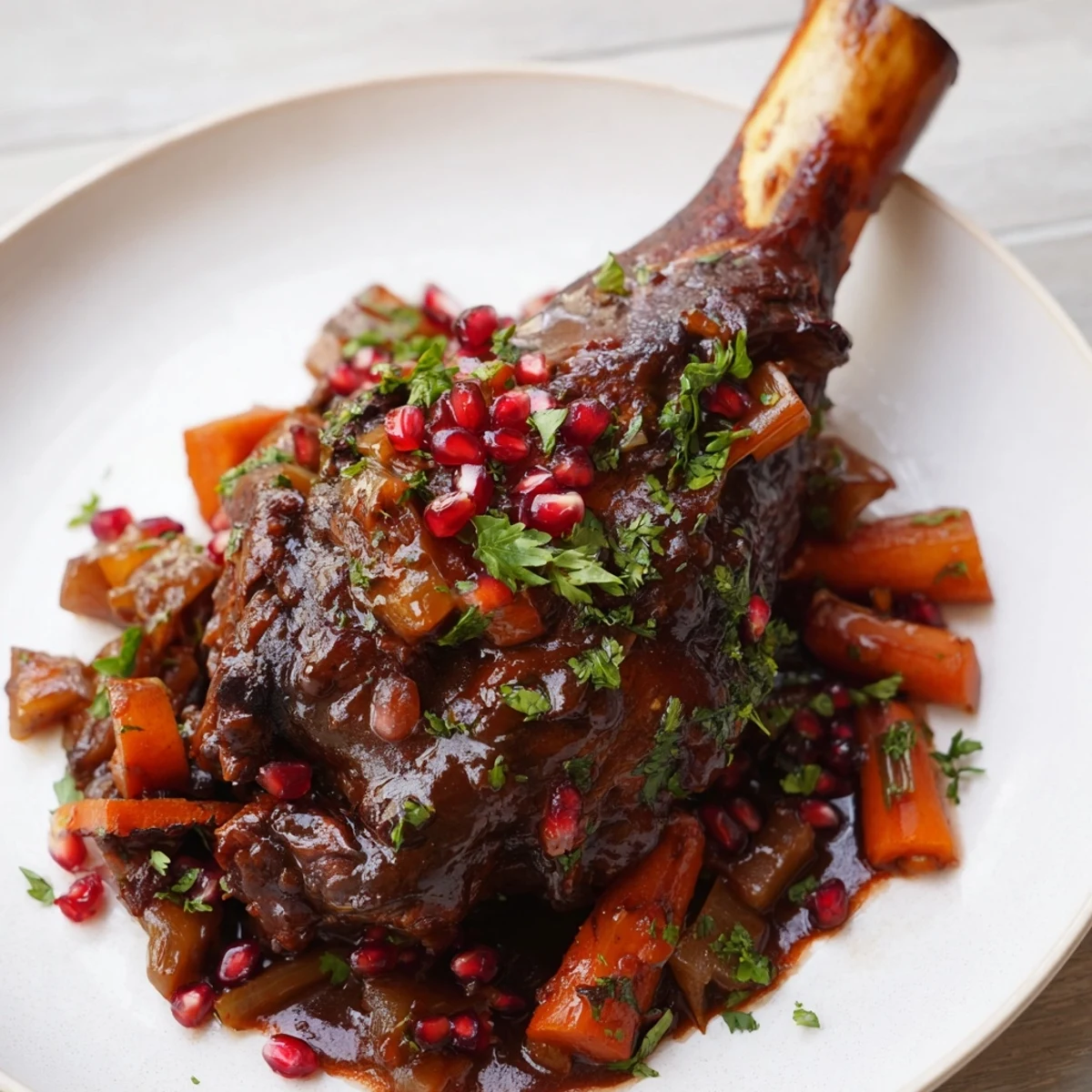
 Experience tender lamb shanks gently braised over hours in a fragrant blend of cumin, coriander, and cinnamon, enhanced by the deep, tangy notes of pomegranate molasses. This slow-cooked dish develops rich flavors as the meat becomes succulent and soft, perfectly complemented by a bright finish of fresh pomegranate seeds and parsley. Ideal for leisurely meals and special occasions, it pairs wonderfully with saffron rice or roasted vegetables.
My friend Leila brought a bottle of pomegranate molasses to my kitchen one autumn evening, and as she described how her grandmother made these lamb shanks, I could already smell the cinnamon and cumin filling the air. There's something about braising meat low and slow that transforms a simple Sunday into something almost ceremonial. I watched her carefully arrange the shanks in the pot, explaining how patience was the real secret ingredient, and I knew I had to master this dish. Now, whenever I make it, I'm transported back to that evening and to kitchens across the Levantine coast.
The first time I made this for my parents, I was so nervous about the timing that I checked on it every fifteen minutes despite knowing better. My mother sat at the kitchen counter with tea, just watching and occasionally nodding, and by the time we pulled that pot from the oven, the kitchen was so fragrant she said it smelled like the spice markets of her childhood. That's when I understood this wasn't just a recipe, it was a conversation across generations.
Ingredients
- Lamb shanks (4 pieces, 400–500 g each): Look for shanks with good marbling and ask your butcher for pieces that are roughly the same size so they cook evenly.
- Ground cumin (2 tsp): This warm spice is the backbone of the dish; toast it lightly before grinding if you have whole seeds, which deepens its flavor.
- Ground coriander (1 tsp): It adds a subtle sweetness and floral note that balances the earthiness of the cumin.
- Ground cinnamon (1 tsp): Use the good stuff here; it should smell warm and complex, not dusty.
- Ground allspice (1/2 tsp): This bridges spices together and adds a subtle warmth without announcing itself.
- Smoked paprika (1/2 tsp): It introduces a whisper of smokiness that makes the whole dish feel more grounded.
- Ground black pepper (1/2 tsp): Freshly cracked makes all the difference in the final taste.
- Salt (1 1/2 tsp): Adjust to taste at the end; the stock adds salinity too.
- Medium onions (2, finely chopped): They create the aromatic base and dissolve into the sauce during cooking.
- Garlic cloves (4, minced): Add them after the spices so they bloom in the heat without burning.
- Carrots (2, diced): They add sweetness and body to the sauce.
- Celery stalks (2, diced): This adds depth and a subtle vegetal note that rounds out the flavors.
- Beef or lamb stock (400 ml): Use homemade if you can; it makes a noticeable difference in the final flavor.
- Pomegranate juice (200 ml): Fresh is best, but unsweetened bottled works when life gets busy.
- Pomegranate molasses (3 tbsp): This is what makes the dish sing; it's tart, deep, and irreplaceable.
- Tomato paste (2 tbsp): It adds umami and helps the sauce develop body as it reduces.
- Olive oil (2 tbsp): Use a good quality oil that can handle high heat for searing.
- Pomegranate seeds (from 1/2 pomegranate): Save these for garnish; they add brightness and a burst of tartness at the end.
- Fresh parsley (2 tbsp, chopped): Green and herbaceous, it's your final flourish of freshness.
Instructions
- Get everything ready:
- Preheat your oven to 160°C and pat your lamb shanks completely dry with paper towels, then season them generously with salt and pepper on all sides. This drying step is crucial because it allows the meat to brown properly instead of steaming.
- Sear the meat:
- Heat your olive oil in a large Dutch oven over medium-high heat until it shimmers, then carefully place the lamb shanks in the pot and let them sit undisturbed for a couple of minutes on each side. You're building flavor here, creating a golden crust that will anchor the entire dish, so resist the urge to move them around too much.
- Build the aromatic base:
- Remove the shanks and add your onions, carrots, and celery to the same pot, stirring occasionally until they soften and begin to turn golden at the edges. You'll notice the fond stuck to the bottom of the pot; that's pure flavor waiting to be incorporated.
- Bloom the spices:
- Add your minced garlic and all the dry spices, then stir constantly for about a minute until the kitchen fills with that intoxicating fragrance. This toasting step coaxes out the essential oils in the spices and prevents them from tasting dusty or raw in the finished dish.
- Deepen the sauce:
- Stir in the tomato paste and cook it for another minute, letting it caramelize slightly in the oil. This concentrated tomato flavor becomes the background note that makes everything taste richer and more complex.
- Bring it all together:
- Return the lamb shanks to the pot and pour in the pomegranate juice, stock, and pomegranate molasses, then stir gently to combine and bring everything to a simmer. The liquid should come about halfway up the sides of the shanks.
- Braise low and slow:
- Cover the pot and transfer it to the oven, then braise for 2 to 2.5 hours, turning the shanks once halfway through so they cook evenly. The meat is ready when it's so tender that a fork passes through without resistance and it's practically falling from the bone.
- Reduce the sauce:
- Remove the lid for the final 20 minutes and let the sauce reduce and thicken slightly, concentrating all those flavors into something glossy and cling-to-the-meat delicious. If your sauce is still too thin at this point, you can reduce it further on the stovetop after the meat is done.
- Finish and serve:
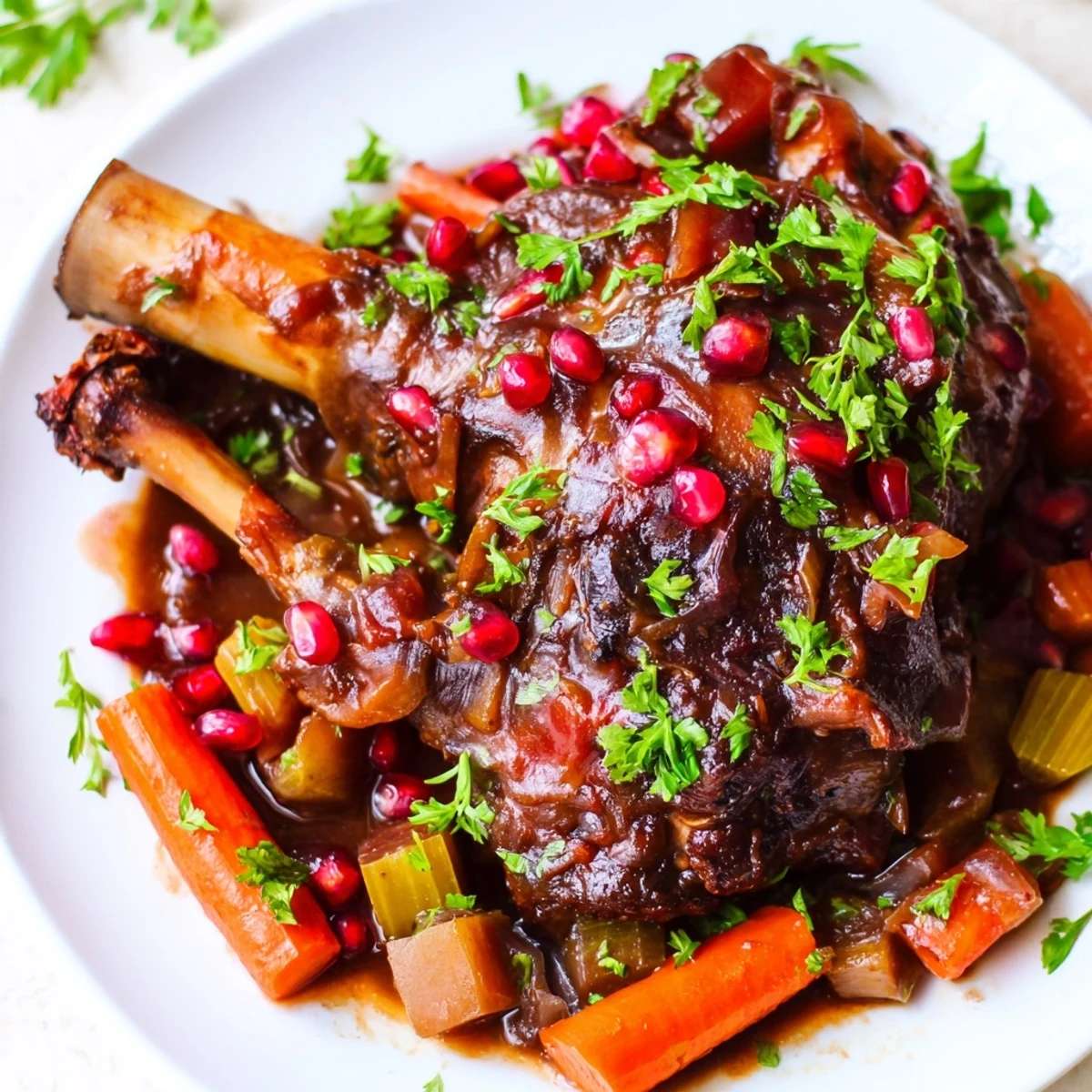
- Spoon that rich sauce over each shank and top with a handful of pomegranate seeds and fresh parsley for a pop of color and brightness. The seeds should stay relatively whole so they burst on your tongue with that tart, jewel-like flavor.
 Save to Pinterest
 My sister surprised everyone at her engagement dinner by requesting this dish instead of anything traditional, and as we sat around the table with the sauce glistening on our plates, she told us it reminded her of every celebration that mattered. That's when I realized food is just the beginning of a meal; the rest is memory and love.
Choosing Your Lamb
Visit a butcher who knows their meat, and ask for lamb shanks cut from the front leg, which tend to be more tender than those from the back. If lamb feels precious or expensive to you, remember that a few ounces of it braised this way feeds four people, so it's actually quite economical for the impression it makes.
What to Serve Alongside
Saffron rice is the classic pairing, but I've also served these shanks over creamy hummus, roasted vegetables, or even with crusty bread for soaking up every last drop of sauce. The key is something that can stand up to the richness and doesn't compete with the spices.
Making It Your Own
This dish has room for your personal touches and kitchen discoveries. Add a cinnamon stick or a bay leaf if you like deeper complexity, or stir in a splash of pomegranate juice at the end if you want it brighter.
- If lamb feels too adventurous, beef shanks work beautifully and take the same time to become fork-tender.
- A robust red wine like Shiraz pairs perfectly, and a glass in the kitchen while you cook is never a mistake.
- Leftovers actually taste better the next day, so don't hesitate to make this ahead for a dinner party.
 Save to Pinterest
 This dish teaches patience in the best way possible, filling your kitchen with warmth and fragrance while asking nothing of you but time. When you pull it from the oven and see those shanks glistening in that dark, glossy sauce, you'll understand why people have been making versions of it for centuries.
Recipe Questions & Answers
- → How long should lamb shanks be slow-cooked?
-
For tender and flavorful results, lamb shanks should be cooked at a low temperature for about 2 to 2.5 hours until the meat is soft and falling off the bone.
- → What spices enhance the flavor of the lamb shanks?
-
Aromatic spices such as cumin, coriander, cinnamon, allspice, and smoked paprika provide warmth and depth to the dish.
- → Can I substitute beef stock for lamb stock?
-
Yes, beef stock can be used as an alternative and will still complement the rich taste of the lamb and pomegranate sauce.
- → What side dishes pair well with this dish?
-
Saffron rice, couscous, or roasted vegetables balance the rich flavors and create a well-rounded meal.
- → How does pomegranate molasses affect the dish?
-
Pomegranate molasses adds a sweet-tart depth, enhancing the overall aroma and providing a subtle tangy finish to the slow-cooked lamb.
- → Is this dish suitable for gluten-free diets?
-
Yes, this preparation contains no gluten ingredients, but always check labels on stock and molasses for cross-contamination risks.