
 Save to Pinterest
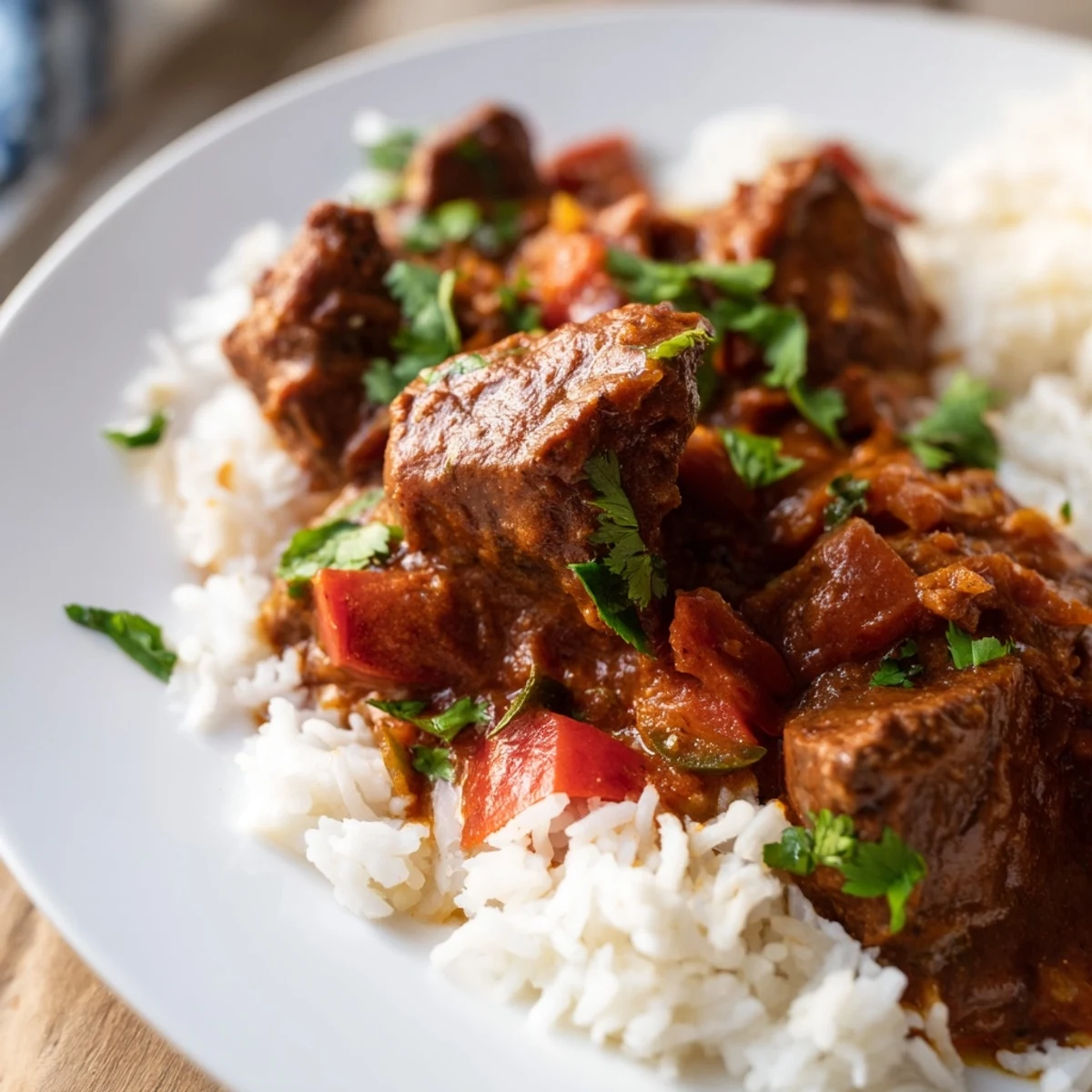
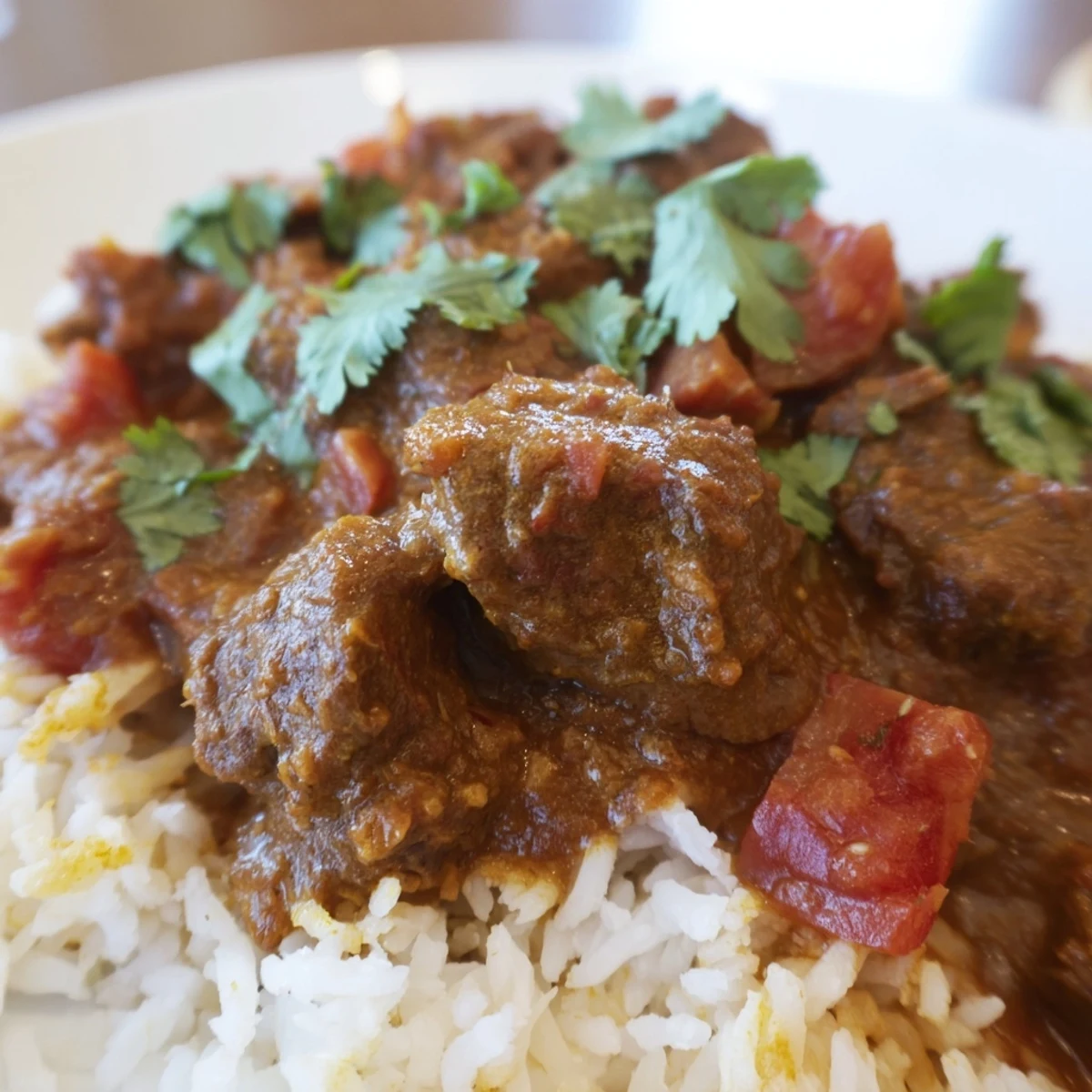
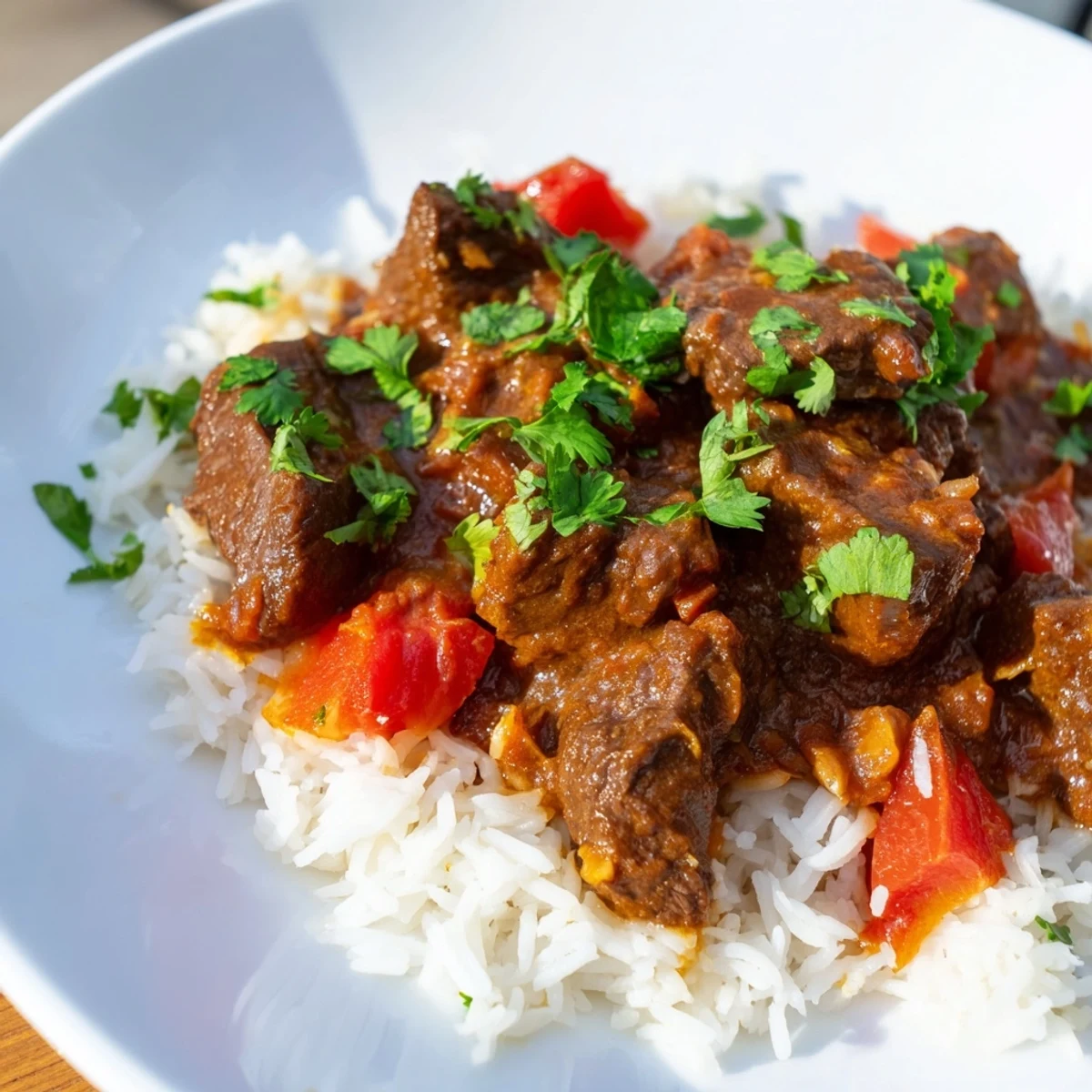
 This dish features succulent beef cubes slowly simmered in a fragrant blend of spices including cumin, coriander, turmeric, and chili powder, creating a robust sauce enriched with coconut milk. The curry is served atop perfectly cooked, fluffy basmati rice, providing a balanced texture and subtle aroma. Fresh cilantro adds a bright finish, while optional fresh chilies spice up the flavor profile. Ideal for those who enjoy medium heat and complex spice combinations.
There's something about the smell of cumin and coriander hitting hot oil that stops me mid-thought every time. Years ago, a friend from Delhi taught me that a proper curry isn't rushed—it's coaxed. This spicy beef curry became my answer to winter nights when I wanted something warm, bold, and undeniably real.
I made this for my sister's book club once, terrified they'd find it too spicy or too fussy. By the second bite, three people asked for the recipe, and one admitted she'd never realized homemade curry could taste this clean and bright. That's when I stopped apologizing for how much I love this dish.
Ingredients
- Vegetable oil: Use something neutral that won't smoke—I learned the hard way that good oil makes the sear, not just permits it.
- Beef chuck, 1-inch cubes: The marbling in chuck is what keeps it tender after an hour of simmering, not tough like lean cuts turn.
- Onion, finely chopped: This is your flavor foundation; don't rush the golden-brown moment or you'll miss the sweetness.
- Garlic and ginger: Fresh is the only option here—that raw bite mellows into something almost honey-like as it cooks.
- Tomato paste: A concentrated punch that deepens the whole curry; blooming it in oil for a minute releases flavors you didn't know were there.
- Diced tomatoes: Canned works beautifully because you want them soft enough to dissolve into the sauce.
- Beef broth: This is what keeps everything from becoming paste; I use homemade when I have it, store-bought when I don't.
- Spices (cumin, coriander, turmeric, chili powder, garam masala, cinnamon): Buy them fresh if you can—old spices taste like dust, and there's no hiding that in curry.
- Green chilies: Optional but worth it if you like a fresh, bright heat that cuts through richness.
- Coconut milk: This softens everything, balances the spice, and makes you wonder why you don't use it in everything.
- Fresh cilantro: The final whisper of freshness that makes you taste green in a sea of warm spices.
- Basmati rice: Its delicate structure soaks up sauce without falling apart—jasmine rice runs a distant second.
- Butter or ghee: Ghee is traditional, but honest butter works and smells incredible as it toasts the rice.
Instructions
- Brown the beef:
- Heat oil until it shimmers and almost smokes. Working in batches so you're not crowding the pan, sear each cube until the edges are caramelized and golden—you're building flavor here, not cooking the beef through. It'll take maybe 12 minutes total for all the pieces. Set them aside on a plate.
- Build your aromatic base:
- In the same pot, add onions and let them cook undisturbed for a few minutes until they start turning golden, then stir. You want them soft and slightly caramelized, about 8 minutes total. Add garlic and ginger and let it bloom for just one minute—any longer and it turns bitter.
- Wake up the spices:
- Stir in tomato paste and cook it for a full minute, letting it darken slightly and smell almost sweet. Add your diced tomatoes, stir everything together, and let it cook for 2-3 minutes. This is where the curry stops being ingredients and starts becoming itself.
- Spice everything:
- Sprinkle in cumin, coriander, turmeric, chili powder, garam masala, cinnamon, salt, and pepper. Stir until every speck of tomato and onion is coated. The smell at this moment should stop you—that's your signal that it's right.
- Simmer the beef low and slow:
- Return the beef to the pot, pour in beef broth, and bring everything to a gentle simmer. Cover and turn heat to low—you want tiny bubbles, not a rolling boil. Let it go for a full hour, stirring every 15 minutes or so. The beef will resist at first, then gradually surrender to tenderness.
- Finish with coconut milk:
- After an hour, stir in the coconut milk and add fresh green chilies if you want that bright, living heat. Simmer uncovered for 20-30 minutes until the sauce thickens and clings to the beef. The coconut mellows everything while somehow making the spice sing.
- Cook the rice alongside:
- While the curry simmers its final stretch, rinse basmati rice under cold water, rubbing it between your hands until the water runs nearly clear—this keeps it from gumming up. In a saucepan, combine rice, water, butter, and salt. Bring to a boil, cover, and drop the heat to low for exactly 15 minutes. Kill the heat, leave it covered for 5 minutes, then fluff with a fork—each grain will be separate and tender.
- Bring it all together:
- Spoon the curry over a mound of rice and shower it with fresh cilantro. Serve immediately while the rice is warm and the curry still steams.
 Save to Pinterest
 My neighbor once told me that eating this curry at my table made her realize she'd been ordering takeout instead of cooking. That comment stuck with me more than compliments about the food itself. There's something humbling about someone choosing to cook instead of outsource, and this dish earns that choice.
Adjusting the Heat to Your Preference
I've learned that spice isn't about proving yourself—it's about pleasure. Some nights I use half a teaspoon of chili powder and no fresh chilies; other nights I'm generous with both. The beautiful part is that the curry's flavor stays intact either way. Start conservative, taste as you go, and remember that you can always add more heat but you can't take it back. If you do overdo it, stir in an extra splash of coconut milk to gentle things down.
Why This Curry Gets Better Over Time
Curry is one of those dishes that actually improves the next day. The flavors deepen and meld together in the refrigerator overnight, and when you reheat it gently on the stove with a splash of water or broth, it tastes richer and more complex than when you first made it. I've started intentionally making extra just so I can have tomorrow's version be better than today's.
Serving Suggestions and Pairings
I serve this curry with fluffy basmati rice, but if you want to go deeper, warm up some naan and let it soak up every drop of sauce. A cool, crisp cucumber raita cuts through the richness beautifully, and a simple green salad with lemon dressing adds brightness. Some nights I'll put out a small bowl of yogurt or a squeeze of fresh lime on the side—let people finish their own plate however feels right.
- Make a quick cucumber raita by mixing grated cucumber, plain yogurt, a pinch of salt, and fresh mint.
- Toast naan in a dry pan or directly over a flame for 30 seconds per side to warm and char it slightly.
- Serve with fresh lime wedges so people can adjust the brightness to their taste.
 Save to Pinterest
 This curry is proof that home cooking doesn't need to be complicated to be special. It just needs time, decent ingredients, and the willingness to let flavors build.
Recipe Questions & Answers
- → What cut of beef works best for this dish?
-
Beef chuck cut into 1-inch cubes is recommended for its tenderness and ability to absorb flavors during slow simmering.
- → How do I achieve the perfect texture for the basmati rice?
-
Rinse the basmati rice under cold water until clear, cook with water and butter/ghee on low heat, then let stand covered for 5 minutes before fluffing.
- → Can I adjust the spice level?
-
Yes, modify the chili powder amount and include or omit fresh green chilies to suit your preferred heat intensity.
- → What alternatives can I use for beef?
-
Lamb or chicken are excellent substitutes but will require adjusted cooking times for optimal tenderness.
- → How does coconut milk affect the curry?
-
Coconut milk adds creaminess and balances the heat, enhancing the overall richness and smoothness of the sauce.