
 Save to Pinterest
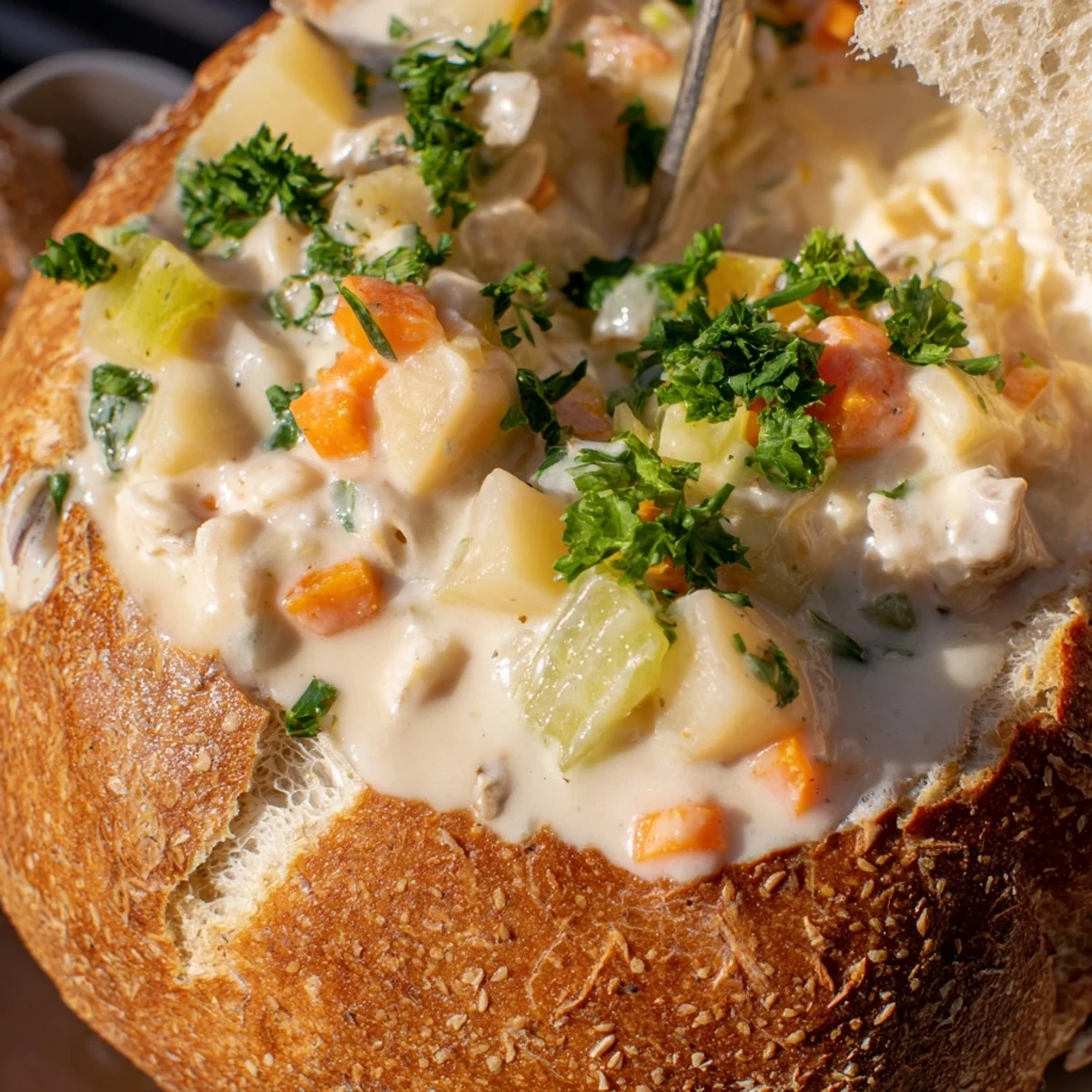
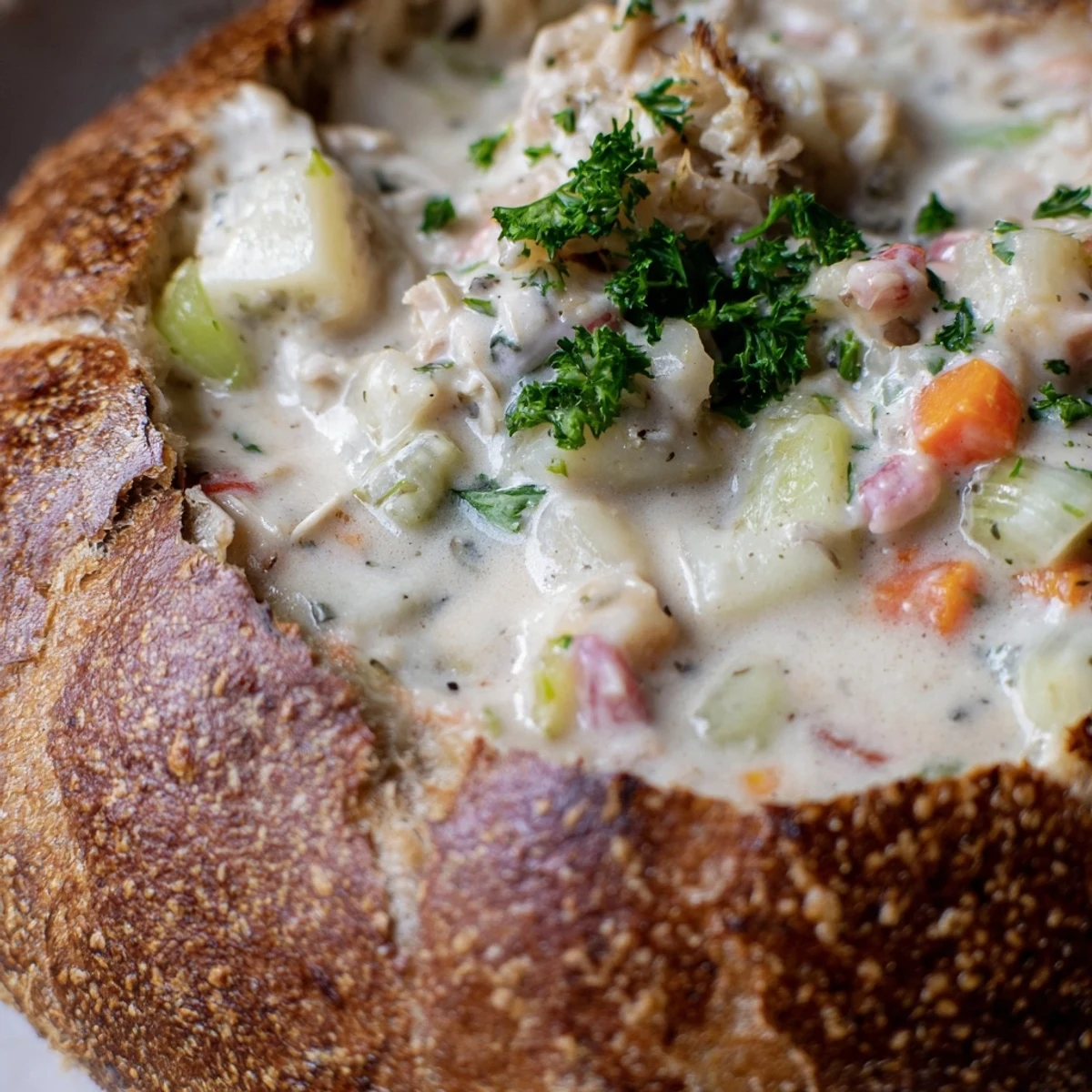
 This comforting dish features tender clams and diced potatoes simmered with aromatic vegetables in a creamy broth. The chowder is gently cooked to develop a rich, velvety texture, then served inside a hollowed sourdough bread bowl for a rustic presentation. Subtle herbs like thyme and parsley enhance the flavors, while butter and cream add a luscious finish. Ideal for a fulfilling main dish with a hearty balance of textures and flavors.
There's something about a bowl of clam chowder that stops time. I found myself on a gray Boston afternoon years ago, wandering into a tiny waterfront café with my hands buried in my coat pockets, and the first spoonful of their creamy chowder felt like coming home to a place I'd never been. That day taught me that the best dishes aren't just recipes—they're vessels for warmth and comfort, especially when served in bread you can eat.
My sister brought this to a dinner party during one of those late-autumn evenings when everyone arrived cold and left warm. Watching her ladle it into the bread bowls while the kitchen steamed around us, I realized why recipes like this get passed down—they're an excuse to gather people and make them feel tended to.
Ingredients
- Canned chopped clams (2 cups): Save that juice in the can—it's liquid gold for flavor, and using canned clams means you skip the mess of fresh ones while losing nothing in taste.
- Russet potatoes (1 cup, diced): These break down just enough to thicken the chowder naturally without turning to mush if you're gentle with the simmer.
- Celery, onion, and carrots (1/2 cup each): The holy trinity of flavor—don't skip the carrots, their sweetness is what makes people ask for the recipe.
- Heavy cream and whole milk (1 cup each): Heavy cream alone would be too rich; this combination keeps it silky without being overwhelming.
- Unsalted butter and flour (3 tbsp each): Your roux is the backbone here; cook it long enough to taste toasted, not raw.
- Clam juice (1 1/2 cups): If you don't have enough reserved juice, bottled clam juice works perfectly—it's shelf-stable insurance.
- Bay leaves, thyme, and parsley (2, 1/2 tsp, 1/2 tsp): These dried herbs are quieter than fresh, which is what you want so nothing drowns out the clams.
- Sourdough bread bowls (4 small loaves): The tangy crust holds up to the cream better than softer breads, and the structure matters more than size.
Instructions
- Hollow out your bread vessels:
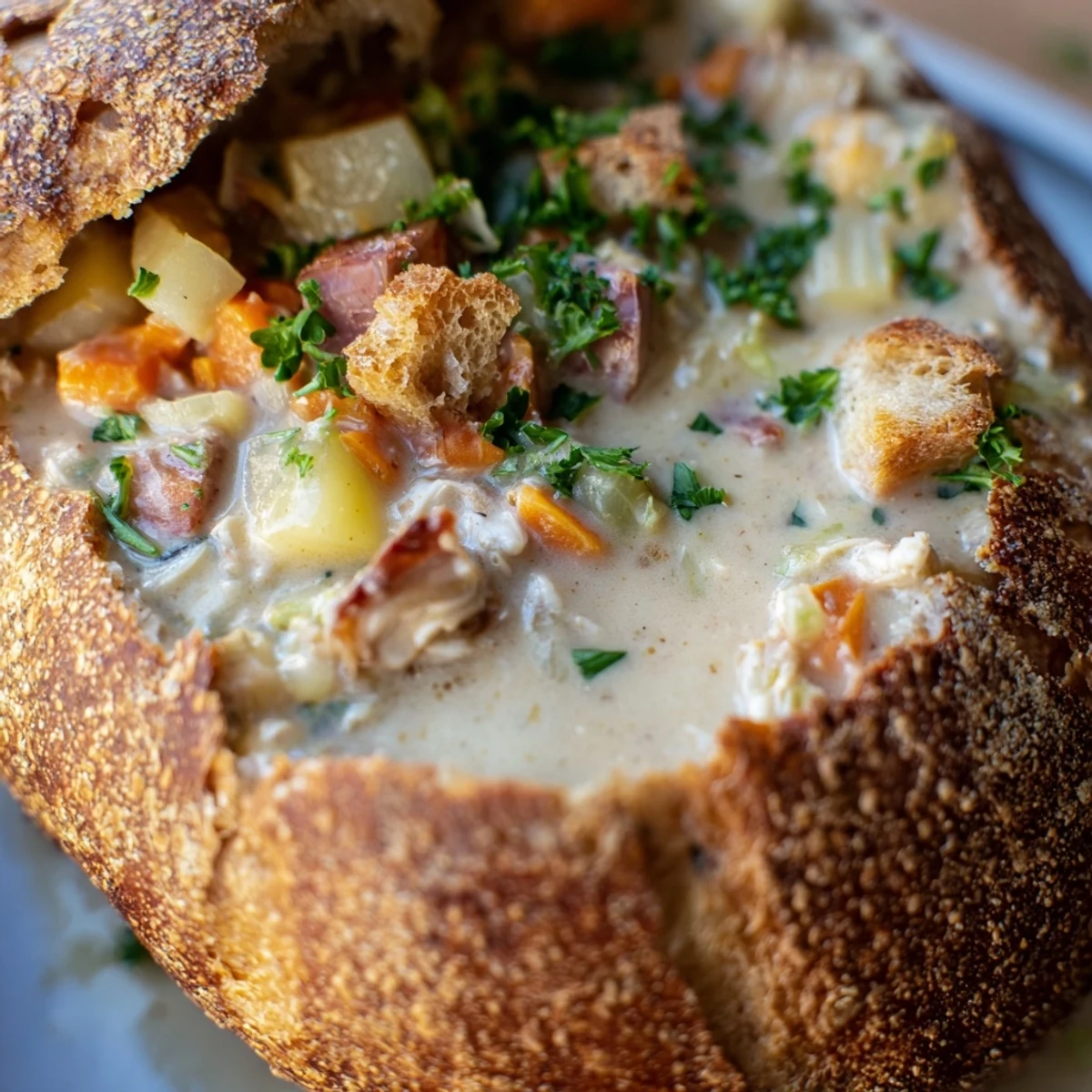
- Slice the top quarter off each sourdough loaf and scoop out the insides, leaving walls thick enough that they don't collapse when you pour in hot chowder. Set the lids aside—some people brush them with butter and toast them for croutons.
- Build your aromatic base:
- Melt butter over medium heat and add your diced onion, celery, and carrots. You want them soft and fragrant, which takes about 5 minutes; this is when your kitchen smells like something good is happening.
- Make a roux without lumps:
- Stir the flour into the hot butter and vegetables, keeping everything moving with a wooden spoon for about 2 minutes. You're looking for a paste that smells toasted but not bitter—this prevents the chowder from ever being floury.
- Whisk in the clam juice slowly:
- Pour the clam juice in gradually while whisking constantly, which prevents lumps from forming and creates a silky base. Add potatoes, bay leaves, thyme, and parsley, then bring to a simmer and let it cook 10 to 12 minutes until potatoes yield to a fork.
- Finish with cream and clams gently:
- Reduce heat to low, then add the clams with their juice, heavy cream, and milk, stirring often for 5 to 7 minutes until steaming but never boiling—boiling breaks the cream and toughens the clams. This is the moment to taste and adjust seasoning.
- Serve immediately in warm bowls:
- Remove the bay leaves, ladle the chowder into your hollowed bread bowls, and serve at once while everything is still hot and the bread is still crusty outside.
 Save to Pinterest
 There's a quiet moment after you ladle this into a bread bowl, when steam rises and someone closes their eyes to breathe in before the first spoonful—that's when you know a recipe has worked. Food becomes memory then.
The Sourdough Bowl Game Changer
The bread bowl isn't just showmanship, though it is partly that. As you eat toward the bottom of the chowder, the bread softens from the outside in, becoming almost like a biscuit dipped in cream sauce. By the end, you're eating the bowl itself, and nothing goes to waste.
Timing and Make-Ahead Strategy
You can make the chowder up to 2 days ahead and reheat it gently on the stove, stirring often—this actually deepens the flavor as everything melds overnight. Hollow your bread bowls no more than a few hours before serving so they stay sturdy, and if they start feeling soft, brush the insides with melted butter and give them a quick toast in a 350°F oven.
Flavor Layers and Personal Touches
Some people add a dash of hot sauce or Worcestershire sauce for depth without it reading as spicy—start with just a few drops and taste as you go. Fresh chopped parsley brightens the dish at the end, and crispy bacon bits (if you want to break the pescatarian rule) add a smoky contrast that people notice but can't quite name.
- A squeeze of fresh lemon juice right before serving lifts the entire bowl without making it taste citrusy.
- If you want it lighter, swap half-and-half for heavy cream and it still tastes rich.
- Pair it with a crisp Chardonnay or a light lager to balance the cream.
 Save to Pinterest
 This chowder lives in that perfect space where it feels special enough for company but honest enough to make just for yourself on a cold night. Once you've made it, you'll understand why people keep coming back to it.
Recipe Questions & Answers
- → How do I prepare the sourdough bread bowl?
-
Slice off the top of each sourdough loaf and gently hollow out the center, leaving a thick shell to hold the chowder.
- → Can I use fresh clams instead of canned?
-
Fresh clams can be used if properly cooked and shucked; adjust the clam juice amount accordingly to maintain broth richness.
- → What thickening method is used for this chowder?
-
A roux made with butter and flour is cooked briefly before adding clam juice to create a creamy base for the chowder.
- → Which herbs complement the flavors best?
-
Dried thyme and parsley are added early during simmering to impart an aromatic, subtle herbal note.
- → How do I prevent the chowder from boiling after adding cream?
-
Reduce heat to low and stir gently, allowing the chowder to warm through without boiling, preserving creaminess and texture.
- → What are good pairing options with this dish?
-
A crisp Chardonnay wine or a light lager beer pairs well to balance the chowder's richness.